
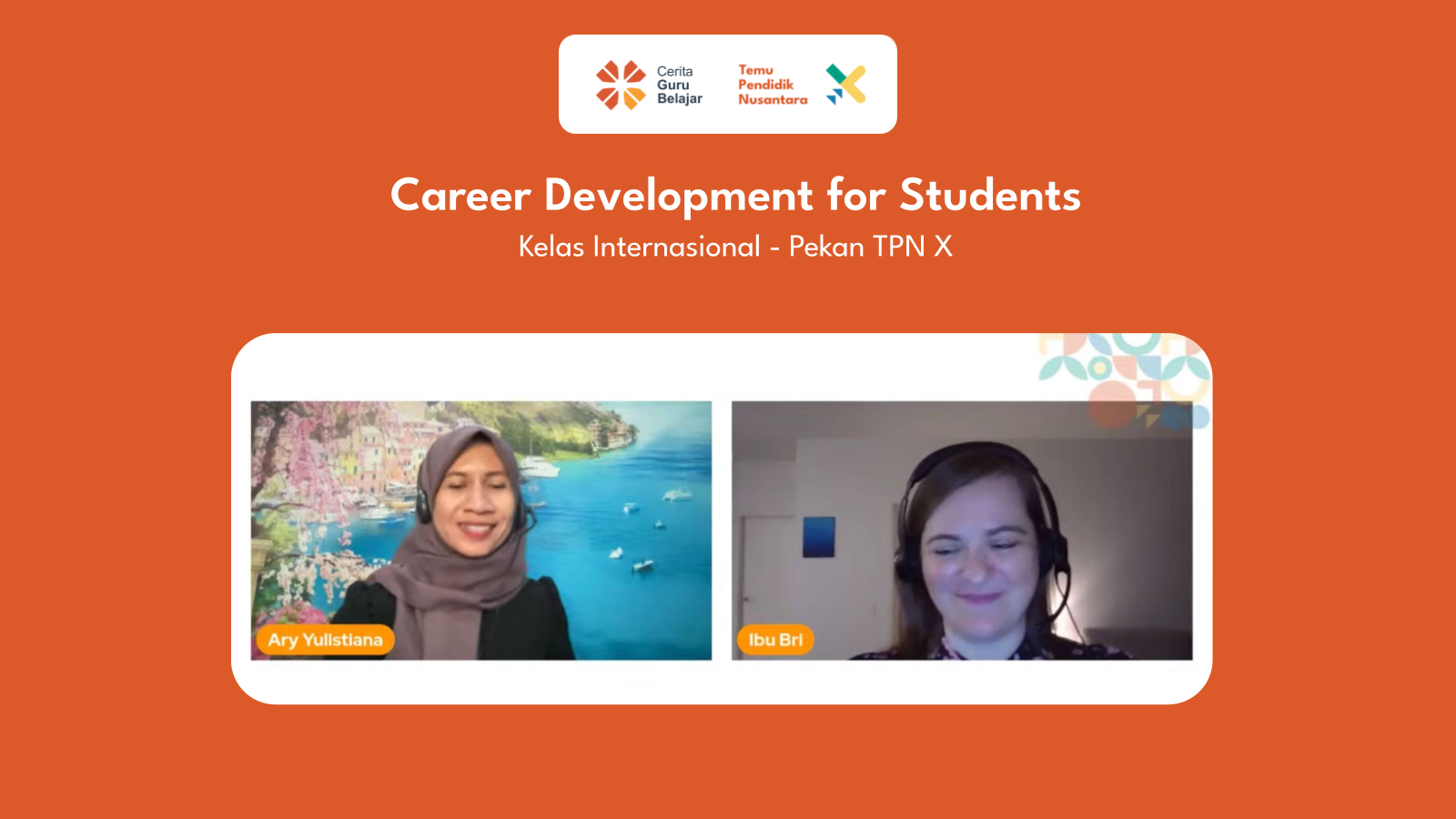
It is not uncommon to find students who graduate from school still not ready to actively enter the community as a workforce. This is a concern that needs special attention.
“Parents are also worried that their children will not be equipped to successfully navigate the transition,” Pepper Biannon McLoughlin, Director of Community and Internal Communication Teach For Australia in international class at the X Archipelago Educators Gathering Week some time ago.
Briannon said that there are students who have to grow in certain environments and conditions, for example low socioeconomic status. This makes it difficult for students to gain access to information, opportunity, or even role-models which is able to give them an idea of the variety of careers available.
This lack of access also means that students' aspirations are limited. “As the saying goes, you can only be what you can see. So here the role of educators is needed to support students' career development,” said Briannon.
Discuss Career Development Realistically
As a first step, need to ensure educators and students have the same view in defining career development.
Usually students still have very simple thoughts, for example when getting your first job, then automatically they are able to continue to climb the peak of their career stably.
“It could be that not everything will go smoothly. Ups and downs, left and right. For example, you have tried your best, but you feel like one impostor and insecure, have to change jobs. Maybe you will also be successful in getting a promotion. In practice, there are many possibilities that could happen,” Briannon elaborated.
This fact can certainly be very intimidating for students. "To make it easier for educators to explain it realistically but easily understood by students, we have Four-L,” said Briannon
First Briannon explains about up ladder, that is, when students have the opportunity to move up in his work, for example through department promotion. However, not all jobs have continuous upward structural career development. Like lattice, career journey can go through criss-cross path, there are times to move diagonally, for example changing jobs and adding skills.
“Ada leadership, not everything results in formal promotion. Trusted to lead a project, become organizer, and added responsibility, is also a development,” explained Briannon.
Previous generations tended to stay working in the same place for life. “Today's younger generation prefers career variety. Launchpad, one job leads to the next job,” said Briannon.
“Enterprise Skill” Framework
After defining and explaining it precisely, educators need framework in the classroom to help students navigate their future careers.
“We used to know that in Australia work-experience, visits to several corporations or organizations so that students can see the work environment there. Then there is talent-test, to find out students' strengths so they know which career path is most suitable for them,” Briannon shared.
However, it is less effective because after learning it once, students will tend to forget it afterwards. Therefore, needed framework that educators can use continuously. “Repetition is critical,” Briannon reminded.
Briannon explained whatever career the students would choose, it is important for them to own and master enterprise skill. Which is meant like self-management, innovation, global citizenship, communication, emotional judgement, team collaboration, critical thinking, digital literacy, problem solving, and professional ethics.
“Framework which contains these skills can be installed in the classroom and educators can continue to relate them to each lesson. As self-reflection, that way students are able to think about which skills they have and want to develop,” said Briannon.
These skills will later be able to make students as valuable employee, even though later they will have to change jobs.
“Career Identities” Framework
Next Brainnon explained, in class rather than asking students to choose one specific job, it is better to facilitate students to have a broader picture and consideration.
“We have career identities framework, which contains performers, mover, designer, technology, artist, athlete, informer, coordinator, carer, maker, hill climber,” Briannon explained.
In today's era, change happened so quickly, including in areas of work. By categorizing through career identities framework, Students can identify and develop their relevant skills without time limitations.
“When educators can choose and use framework right for their students, This can be a gift and provision for the student's future career,” concluded Briannon.
Writer: Dasa Feby


Pingback: Five Strategies to Improve the Quality of School Supervisors - Learning Teacher Foundation